Saturday, July 20, 2013

Speck


I was a child when I saw myself through the lens of a
telescope. Mr. Bowman had the image, captured by satellite,
on his desk. Beyond imagination, he’d muse. Even then

I was asking myself whether I was inconsequential or a
functioning part of some grand design—wondering what part
of that speck was my tiny, rundown home. That same day

Tuesday, May 28, 2013

A Fictionalized Account of Sean Enfield’s Hubris Following His Feature on NPR’s All Things Considered

For those of you who don't know, I was featured on NPR's All Things Considered as a part of their Three Minute Fiction contest. They read an excerpt of my entry over the airwaves this past Sunday. You can read it here. 

INT. HALLWAY – AFTERNOON

SEAN ENFIELD paces around the hallway of the International School where his church is held. Sean does not appear to be the confident writer that he thought he’d be upon the public broadcasting of his text; rather, he appears nervous as though he were waiting on a doctor to deliver test results confirming the presence of some terminal disease flowing alongside his blood. 


JACKIE LEIGHTON is rattling on about something or other. Sean is not listening. He cannot. The words all pass through him, “wah wah wah wah,” as he creeps up and down the hall. The static of the radio sings to him. It is the only noise in the world, nay, the universe. Finally, the moment arrives.

JACKIE

We’re back reading excerpts from Round 11 of our Three Minute Fiction Contest …

The words turn to inarticulate sound effects again. ZOOM IN: on Sean Enfield—his sweaty palms and face (and not just because of the heat nor just because he is a generally clammy person), his aimless stare, the nervous way he glances down at his phone to see if anyone else is listening and waiting to congratulate him, his tired eyes, his groomed moustache and carefully chosen tie-and-shirt-combination (though he would not be seen for this momentous occasion). He tunes out. The scene turns black. He does not hear the story before his. He doesn’t even hear his story being read.

When he comes to, he hears this and only this …

JACKIE

Sean Enfield of Denton, TX
yes, this is the same stock photo. I like it.

He leaps into the air … like Mario, like a freeze-frame shot of an 80s flick, like Jordan at the buzzer beater, like an Olympic hurdler over that last hurdle, like a distraught man on the side of the Golden Gate Bridge, like you might jump when the person you love calls your name for the first time and you fall into their arms. Sean lands. His alone in the hallway. Everything goes silent.

SEAN

Am I … famous now?

JUMP CUT.

Friday, April 19, 2013

From "Natalie Schervo Speaking"


This is an excerpt from a larger work. Perhaps a forthcoming larger work. Perhaps not. Only time and all that ... 

After the phone call, she had begun to wonder if her mother had always carried that insanity with her or if it had come upon her suddenly, like a fever, a rush of blood to the head, just a momentary lapse in judgment.

“She burned her home down,” the man said, so matter-of-factly, so lifelessly, as if crazy women had been burning their own homes down since the dawn of time, “We’re going to need to you to come down here and answer some questions for us.”

Well, could answer some questions for me? she thought. She thought but didn’t say. Her outbursts had gotten her in trouble before. Typically, the problems arose when she was in high school, like the time she shouted at Mrs. Mitchell, her history teacher, who insinuated that Natalie might have been a house slave, a product of rape, during the early nineteenth century. Since then, she had undergone counseling and could now repress the urge to shout, how about I burn your house down, when the man-robot asked her to drive down to her mother’s home, asking if she needed the address as if she hadn’t been stepping through those doors for more than twenty years of her life. Instead, she walked to Tim’s office, politely explained why she needed to leave early today, and hopped into her beat up Pontiac Sunfire, staring at the Real Girls Hotline office building as if it might suddenly combust.

Saturday, April 13, 2013

All the Ways to Say Goodbye

"Listen to the end, dear.
            I can feel your heart pounding; yes, I can. I can hear the thud, thud, thud beating against my face and shaking the very core of my being. I know that you keep your phone tucked beside your breast, often having a difficult time freeing it from your chest’s viper-like grip once the vibration starts and you, too, begin to feel the cadence of my heart mingling with yours. I can feel your heart pounding, dancing with the maniacal rhythm of a third grader with a metal can strapped to his chest and a piece of wood in either hand, and the song gives me pause, beckons me back to days when the sun was just a little higher in the sky and the moon, just a little lower.
            Do not ask how you know me. There isn’t enough time. Let the rhythm take you instead. Let it move you as those old pop songs of the eighties and nineties once commanded. Yes, dear, let it free your mind, for what I have to tell you may not sit well if not properly prepared.

Tuesday, March 26, 2013

A review of Team Tomb's Team Tomb by me's me


Welcome back to Kittens in Ties, loyal reader. For this brief instant, we (meaning I) have slipped into the guise of music reviewer. If you like Pitchfork reviews, pretend I gave the album a 8.125 and a BNM tag or whatever it is they are doing over there nowadays. And listen to it here, and make up your own mind, knowing, however, that if your opinion isn't mine it is wrong.

In a review of the new Foals record, David Goldstein wrote, “What’s a telltale sign that a young British band thinks they’re hot shit? When they open their album with an instrumental,” and while I don’t know if Team Tomb thinks they are “hot shit,” I can say they sound pretty damn sure of themselves. After about thirty seconds of rhythm-less guitar noodling, the hi-hat comes in and clicks the intro track into a somber groove, the kind of groove the comprises the majority of the album. It’s something of a statement, though not made with any words. By the time the falsetto vocals slip into the mix you are already well aware of what kind of band you’re listening to.
For the most part, Team Tomb rides a mellow intensity throughout the album. The guitar licks, performed by Caleb Ian Campbell (formerly of the Polycorns), are graceful, sometimes biting, but never reaching beyond the slinky pop rhythms the band has carved out for itself. In that same vein, the drums drive and propel the tunes with a sort of rhythmic certainty but never really crescendo. Behind it all, simple keyboard lines complete the aesthetic.

Saturday, February 16, 2013

Poem Written in a Gas Station Bathroom

Check out the Vine Leaves Literary Journal. They are a great publication, and I am honored to be featured in issue 5 of their publication.

Sunday, January 27, 2013

The Lost Messiahs of Rock and also Roll

It's purely by coincidence that these two happened to drop by Dallas within a week of each other, and by obsession that I made sure that I saw both. These two men are both titans of a so-called "indie music scene," both often appearing in headlines on Pitchfork, both musicians with adoring fan bases, both Caucasian males.

And that is where the similarities end.

Jeff Mangum at one of his recent solo shows
Jeff Mangum is an enigma wrapped up in a mystery pancaked between a couple of Hardy Boys books, the kind of guy who writes lyrics such as, "Your father made fetuses with flesh licking ladies," and issues press releases with "from a thoracopagus dovecote of comets" in the closing line. He is a relic of the last decade in which larger-than-life personalities could grip the nation as a whole (at least as a perceived whole), a decade in which the mythic aspects of rock and roll was alive and well though threatening to follow Kurt Cobain into the grave. And it did. Eventually. In its wake, several years later, Ty Segall came on the scene, with his John Lennon-esc falsetto and his finger-blistering solos (shredding, if you will).

Yes, Rock 'n Roll is dead, and not in the way your grandfather or your father might say it's dead because they no longer play Zeppelin on the Top 40 stations and because kids these days wear pants that don't fit. Dead in the sense that it's principal philosophy no longer applies to those still touring the nation with guitars and drums in the back of their vans. Gone are the pervasive cultural icons of yesteryear, the titans of Rock who took the nation by storm and gripped the youth of that time so that they would grow up and write Rolling Stone articles celebrating the good ol' days.

Our cultural icons today don't seem to have the staying powers of those in the past. They appear to come in fads, fads that appeal to a certain demographic of people and very few outside of that target audience.

I don't mean to associate Segall and Mangum with that notion of "fads," but there is something ephemeral about the music they play.

Ty Segall
"We've come down with the plague," says a sick Segall, periodically squirting a bottle of cough syrup in his throat, "So let's get weird." And for one loose, loud hour we did get weird. Very weird. So weird, in fact, that one couple used the dance floor as a place to get their "freak" on, coming up mid-song having lost their shirts and their tact.

We all lost our tact for that brief hour, and when the last chord washed over the packed club, we staggered to our respective cars and lives, having jobs and obligations to tend to in the morning.

Mangum starts his set without words, launching straight into "Oh, Comely" after trotting onto the stage. "Are you going to sing with me?" he asks once the song is finished, knowing the answer before the rapturous applause sounds in reply. The crowd, at first reverent and silent, knows every word and bellows them out without hesitation. His voice seems untainted by the decade of reclusive-ness, perhaps even better. So much so, that as he roars through "Two-Headed Boy" you can watch the tears stream down the face of the person beside (though not yours truly, too manly to be moved).

These men attract adoring crowds, perhaps not The-Beatles-on-Ed-Sullivan level of adoration, but from the crying spectators (again not yours truly) at Mangum to the boisterous crowd at Segall, there is no doubt they've garnered their own brand of affection. We're too close to these moments to judge their historical context and cultural perseverance (if they'll even have any). Still, they carry on a new breed of "rock 'n roll," and it just may follow us into the future if we bring it with us.

Yes, in a few years time, we may have our pants waist-high trying to force our children to listen to our Neutral Milk Hotel albums and scoffing when they don't appreciate it like we do. These are the things I dream of. As well as flying...

Saturday, December 22, 2012

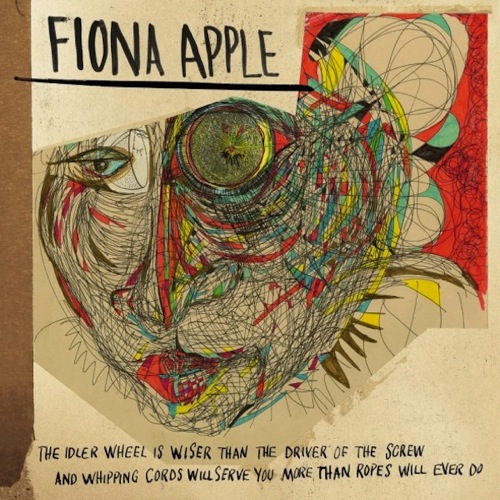
Why Fiona Apple's "The Idler Wheel..." was the Best Thing in 2012 and Other Stuff that Doesn't Suck


1. The Idler Wheel is Wiser than the Driver of the Screw and Whipping Cords Will Serve You More than Ropes Will Ever Do - Fiona Apple

In an age where every statement is clouded with layers upon layers of irony and meta-text, where the very notion of social media masks every action with pretense, forcing even the most bland of us into a life of performance art, the existence of Fiona Apple comforts me. In her, we have an artist who disappeared from the public eye for almost a decade and returned with a record so earnest and revealing that it forces us to remember what real emotions feel like. My Fiona Apple fandom is well-documented, so perhaps I'm exaggerating or gushing or whatever you want to call it. Still, the jittery, stripped down music presented to us on The Idler Wheel... coincides perfectly with the persona on the stage, and I can 't help but believe (maybe I need to believe) that in Apple is not only a genuine artist but a genuine person as well.

Every Single Night, Left Alone, Werewolf


2. The Master - Paul Thomas Anderson

Pretty much everything that can be said about PTA's The Master comes out in the film's first "processing" scene. As a movie that deals with Scientology through obfuscation, The Master seems almost elusive in its aim, a cult in and of itself. Yet in that first "processing" scene, we see a disheveled, alcoholic veteran in Joaquin Phoenix's Freddie Quell find something in Lancaster Dodd's (Phillip Seymour Hoffman) "Cause" that seems to speak to the inner turmoil within hi,. Freddie is erratic, prone to outbursts, and highly susceptible to suggest--the perfect candidate for a disciple--and the procession of  Dodd's "processing" technique and the repetition of simple questions ("What's your name?") into more probing questions about Quell's "past failures" leads the two into an emotional crescendo before dissipating into the lull of post-baptism. The films builds in much the same manner and washes out into the silence and emptiness of a cult's many promises.

Theatrical Trailer

Note: The next two entries actually do suck, but I want to right about them anyway. So here we go...

Saturday, December 15, 2012

To Fish

sean enfield is an asshole
who has taught three people
how to fish. one of them died
two years ago of starvation
while the other two live
impoverished in the slums
of houston waiting for fish
to hook themselves on the end
of one of their lines so that they

Tuesday, December 4, 2012

Mark Twain and a Kitten: An Ode

When this image was first brought to my attention, it seemed me that metaphorical stars were metaphorically aligning, and my documentative instincts immediately led to a trance of reflection. It's a horrible way to live, but we make due, don't we?

Anyway, I couldn't help but feel as though Twain was reaching out to me from beyond the grave via the medium of another literature enthusiast's blog. “Some people scorn a cat and think it not essential; but the Clemens tribe are not of these.” We, Enfields, are with you, Sam--undoubtedly, we are with you.

I was in Junior High when a teacher first introduced me to Mr. Clemens, the same year a balding football coach, through a class dubbed "Health Class," introduced me to intricacies of my then-changing body. In fifth period, we read Huck Finn aloud, several timid white children tip-toeing around the word "nigger" as though it were poison ivy or a land mine or something of that sort whilst looking in my direction to make sure the ethnic half of me hadn't taken offense, and in sixth, we watched a fifteen minute illustrating both the birds and the bees in unwanted detail, which was I how I saw the first vagina I'd ever see, crowning head and all. I had already developed a self-consciousness about my weight and my plump, perpetually-dry lips and my clammy, perpetually-moist palms. I tried to hold hands with the girl who had asked for my help on the Huck Finn paper, but she was not a fan of the nervous sweat dripping from our shared grasp.

Thursday, November 15, 2012

The Always Inevitable and Untimely Demise of the Bond Girl

For the first ten years of my life, I was convinced that my father was Sean Connery, though that was not the name by which I knew him. My real father (depending on what unit you use to measure authenticity) was present, affectionate even--offered encouraging words in times of emotional distress, watched basketball games with me, cheering when I cheered and shouting angrily when I shouted angrily, was concerned about my grades, about my future, about my general well-being--but he was tangible, thereby lacking the mystique of my real real father. I had his nose, his tendency to stand with arms hidden behind the back and to sit leaning backward, crossing legs, his gut, protruding but not too much so, his passive-aggressive manners, but that, to me, meant as much as it might mean to you if I were to tell you that that man, any man, strange in just how normal they seemed, was your father too. As a child who watched his VCR copy of The Lion King into oblivion, I expected a father to be the wise sage in the clouds, James Earl Jones, someone suave who could in one breath offer wisdom and in the next disappear. I grew up watching my mother swoon over Mr. Bond as well and so the two entities blurred in my mind. There was a brief period where her affections switched to Roger Moore’s incarnation of the character that confused me, but she found her way back to the true father and all was made well.

Thursday, November 1, 2012

Brief Moments of Honesty from Otherwise Dishonest People


            Your band sucks. Even through cell phone speakers, barely audible in a crowded bar, she realizes this truth, but her mouth is bound by courtesy. Your band is fucking terrible. It’s all she can think, anticipating the moment when the timer on his iPhone playlist reaches 0:00. She no longer notices the smell of sweat, the distressing and dank atmosphere of her surroundings, the heat, the discomfort of the wooden stool beneath her. All other senses are overridden by the noise, the clamor of countless other conversations around her and the I-IV-V chord progression playing faintly underneath them. Is he bobbing his head to his own song? He can’t be …
           
“What do you think”
            “What do I think?”
            “Of the song?”
            “I can’t really hear it.”
            “Do you like it?”
            “It’s good.”       

Wednesday, October 17, 2012

How Thoreau Might Have Behaved on ChatRoulette

Reading your own work as writer is like masturbating, though for him it was a little less messy, a little less fulfilling, a little more obvious. He wondered if this was how the greats might have felt, if there was some sort of singularity between the writing experiences of all writers. Then, he drifted through them, inhabiting their flesh, reading their words, metaphysical sticking his hands down their (and his) metaphysical pants and underpants.

It was all very odd, strange indeed.

Wednesday, October 10, 2012

I'd Like to Run A Food Truck

I'd like to run a food truck, though I cannot cook. My greatest culinary achievement to this date is an omelet that I managed to flip with only a slight crack in its structural integrity. It was a damn good omelet too. Still, I'd like to run a food truck. I'd like to drive through each and every major city, watch as the people there get fat off my delicious cuisine, smile and come back for more, then move on so that I can experience it all again. Now, I don't know what I'd serve, but I know the local papers would rave about it. I know the reviews on Yelp would be too flattering to even read. I know my truck would become a national sensation. Cities would desperately anticipate its arrival. The McRib. My truck would be the McRib of food trucks.

I'd like to have a family too. An average family--a wife, a daughter, a son, two dogs, a cat and three fish. We would try not to travel when the kids were in school. They would make friends. They would lead normal lives. They would have a home base. Then, come winter or summer break, they would set sail onto the metaphorical seven seas. They would see parts of America most kids only read about in Geography courses. They would be contributing members of the best damn food truck in the world. And I would be there father.

I'd like to ride horses into the sunset. I'd like to be the hero. Like in the movies. I call myself The Man with No Name; I snarl like Clint Eastwood. It's sad, yes, but in the funniest way possible.

I sing songs to myself. I pretend I'm on the stage. There are audiences everywhere I go. You are in the crowd ... and you and you and you and, yes, even you. I interview myself. Ask the most intuitive of questions and respond with the wittiest of retorts. There are people, imaginary people, who kill for my autographs. You can have one. At the moment, they are free.

I'd like to run a food truck. I'd like to drive into the sea.

Wednesday, September 26, 2012

Fiona Apple at the Winstar: this is not about hash

"Fiona Apple doesn't perform her songs -- they escape. "

That is the prevailing rhetoric surrounding Fiona Apple's current Idler Wheel tour, recent arrest notwithstanding. And it's a fitting sentiment, one that Apple perpetuates in each of her performances thus far, and it's a telling one, too, that she has reached a point as a performer that critics are no longer labeling her performance as performances. No, they go to the top shelf of their vocabulary when Fiona comes through town. But it fits. She is an enigma, disappearing from the scene and emerging seven years later with a heart-wrenching album of raw and intimate songs.  

When she stands behind the mic, you can hear the intensity in her voice, see it in her thin body as pounds at her chest during a verse, feel it as she crouches down on the stage, contemplating or what-have-you during a interlude. Her fingers fly and bounce atop the keys of the piano.
Image Courtesy of Pegasus News

Wednesday, June 13, 2012

Basketball for the Heavy Set

He had this dream, this beautiful dream. In it, he and Dirk Nowitzki were paired in a 2v2 game against Mark Burrows, the boy who used to throw mashed potatoes at him during freshman lunch, and Michael West, the boy who used to supply Mark with the potato ammunition. The rules were simple: the first to twenty-one points won, and the winning team got to watch as the losers groveled at their feet before ritually committing suicide with the blade of their choice (this being a civilized society). Even in his dreams, he played the role of sidekick, choosing to take the backseat as Dirk leveled point after point onto the opposition. He could pass well enough that he felt his contribution adequate, though he wished he could nail a jump shot, could drive to the rim, could shoot threes with the confidence of a young Larry Bird, but that would never be the case, not even when his imagination was unhindered. Still, he delighted in the demise of his enemies. He took a devious sort of pleasure in watching Dirk do his bidding and even darker brand of pleasure in watching the blades protrude from the backs of those, to him, perpetually thirteen year old monstrosities.

Thursday, May 24, 2012

Of a Kind

She fancied herself a shitty poet, for she had come to believe that those were the most earnest. The talented poets, those who gazed upon the world and saw Truth, could transcribe their vision in a manner with which only other poets could comprehend. Poets of her breed, however, those who gazed upon the world and saw the world, wrote with an identifiable ease. They brought no new light, opened no eyes, moved no hearts, challenged no minds, but what they lacked in poignancy, they made up for in accessibility--in that notion they found transcendence. Like the talented, their audience was broad, though far less analytical and far more modern. They were of an age, a brief moment in time, a whisper into the very ears of God, vanished into the vast plane of history. No one would fight to keep their works in print, nor would anyone attempt to retrieve any lost publications of these truly awful few. When they work ended, so concluded their legacy. They were of a generation, that generation's chief voice as far as sales were concerned, and she was chief among them."Miss Emily Meyers," read everyone of her book jackets, "Shit Poet," and she delighted in the title.

This morning, she did not know delight, however. She knew frustration instead. It crept through her like a rat through the walls. The mini-van reeked of puberty sweat, her twin boys hitting each other in the back seats, her daughter pouting in the front. So much shitty poetry pouring through her and no pen to record it with, no surface to record it on. Did her kids not understand her status--queen of the shit poets, goddess of shitty poetry?

There is, of course, a distinction between the shitty poets and the shittiest poets. Shitty poets were those with mass appeal; whereas the shittiest poets were just shitty poets. The shittiest poets wrote in isolation, dreaming to ascend the ranks, believing that they would one day achieve the status of Yeats or Eliot or Dickinson or what have you, unaware of the majesty that accompanies the shitty poets once their shitty poetry saw sunlight. The only qualm Emily had, and it was a minor one at that, was with the word "shit," but she did not coin that particular part of the phrase anyway. Her brother, not one to censor himself and unfamiliar with concept of tact, provided the inspiration.

"What a shitty poem!" he declared upon finishing what she considered to be her magnum opus, and the words struck her. Shit. shit shit shit shit How vile, how unpoetic. She loved it ... sort of ... she hated it too. Rather, she understood it, realized its function in art, its appeal. This was the role she was born for. Rarely does one get the privilege to look into the mirror and lay eyes upon their purpose, knowing without any semblance of doubt why The Stork delivered your fetus to your mother's womb, but she, Miss Emily Meyers, saw exactly that on a piece of paper, informing her of her first publication. She was a shit poet.

That was her mantra, repeated whenever she sat down to write, and she could not stop writing. Her brain leaked shitty ideas for shitty poems everywhere she went. She wrote about love--all the best shitty poets wrote about love--and she wrote every night. Once she finished a collection, she started another. It was her livelihood, how she fed her kids, paid the rent, kept her dog supplied in the higher-scale brand of dog food for which he had developed an exclusive taste.

Her hand never ached. She did not comprehend "writers block." There were so many things to say, none of them vital, but all of them were said regardless.

That night, she found herself caught by a fever. She never felt this way. When she wrote, she wrote calmly, the words flowing out of her with the ease and steadiness of a running faucet, but tonight, the words pressed against her, forcing their way out. Tremors shot up and down her spine. She was a nine on the Richter scale, a code red threat level, ready to blow at any second. The lights were dim in her room--the pitter patter of little feet on the floor downstairs provided the soundtrack. Every now and then, she would hear an "ouch," and she would mutter a brief prayer that her sons had not killed each other in whatever ill-conceived game they immersed themselves in and that her daughter would not play the role of collateral damage. She would tend to them if she could, but her work had consumed her, had seized her brain, had made her a prisoner to some unknown warden. It occurred to her that she was excreting poetry. She, the shittiest of the shitty poets, for the first time in her career, was excreting her first shitty poem. The others, as shitty as they were, did not come with such toil. They came not from the ass but from the mind, with complete comprehension of their creation. She could not even read the words of this current monstrosity, did not believe she would understand them if she could. This was a chemical reaction, an explosion of thought, volatile. She feared she would never write again, would be incapable, rendered useless by one malicious shitty poem shitted maliciously.

Oh God oh no it can't be She sat back, the words no longer pushing through her. A restoration of clarity overwhelmed her, forced her backwards through time and space. She read it then read it again then read it a third time. no no no She e-mailed her to her brother, waited anxiously at the computer, her daughter crying downstairs while the boys sprinted to their hiding places. no no no 

When his response arrived, her worst fears were realized. Miss Emily Meyers, shitty poet extraordinaire, had written a good, nay, a great poem. All hope was lost. 

Monday, May 21, 2012

The Indisputable Divinity of Ray Allen as Jesus Shuttlesworth and His Father Denzel

I had written you, yes you, a wonderful short story for this particular post. Irreverent, sure. Blasphemous, maybe. Wonderful, most definitely. But as you can see from my italicized used of the past tense, that tale is no more. It has gone the way of my pens, my copy of The Fellowship of the Ring, my iPod, I think maybe a dog or two of mine, and it is now lost. This is the penance I pay for scribbling my short stories on whatever random piece of paper I find laying around and shoving the results into my pockets without any semblance of a thought. My organization has always been ... well, I have none, but so far, it has never brought upon a tragedy of this magnitude.

GONE! My work all gone, and all I have to show for it is this self-deprecating blog post and the pocket lint I retrieved from my pocket instead of my story notes. I could recall only the title, those words forever engrained onto my skull, and a sentence that began, "As he stared into the bear's eyes, convinced that this creature was convinced of his edibility, Jesus raised the basketball..."

The rest is fog, indiscernible and maddening.

Saturday, May 12, 2012

Letter to My Black Half: A Rebuttal

Dear Colored African-American Self,

I received your letter, and it only furthers the point I've been making since 2008: Obama's election has given you an unbearable sense of pride. All of a sudden, we're listening to Outkast, we're watching Spike Lee films, we're seeking out Cornel West interviews on NPR. Where was all this black pride in high school? When you were listening to Pinkerton and crying about girls on full blast instead of Bun B and crying about girls? I apologize for the attempts on your life ... that was perhaps a little too far and unwarranted, but the ego has gotten to be a little much. Your civil rights aren't even a century old yet, and already they're being shoved in my face. Need I remind you that, without me, we wouldn't be half as employable.

Friday, May 11, 2012

Letter to My White Half

Dear Self of the Honkie Variety,

Listen. We need to talk. Don't worry; we aren't splitting up. Unfortunately, that is not an option for us--I have consulted a number of specialist. No, our burden remains to carry on, to deal with each other's faults as Dr. King would have wanted, and that is why I have chosen to write you.

It's the racism, Sean. At first, you would just crack the occasional joke about whatever stereotype you happened to conjure. A "I bet you want some of that fried chicken" or "Shouldn't you be able to dunk" or perhaps even "Use your magic negro powers," which I did not even know was a stereotype until you brought it up, would come gallivanting out of you mouth whenever the situation was "appropriate," and I could live with that ... if it had ceased there. But then came the attempted lynchings. After the first, I thought, surely this was another joke. Then twice ... three times ... four! and I got suspicious.