Tuesday, March 26, 2013

A review of Team Tomb's Team Tomb by me's me


Welcome back to Kittens in Ties, loyal reader. For this brief instant, we (meaning I) have slipped into the guise of music reviewer. If you like Pitchfork reviews, pretend I gave the album a 8.125 and a BNM tag or whatever it is they are doing over there nowadays. And listen to it here, and make up your own mind, knowing, however, that if your opinion isn't mine it is wrong.

In a review of the new Foals record, David Goldstein wrote, “What’s a telltale sign that a young British band thinks they’re hot shit? When they open their album with an instrumental,” and while I don’t know if Team Tomb thinks they are “hot shit,” I can say they sound pretty damn sure of themselves. After about thirty seconds of rhythm-less guitar noodling, the hi-hat comes in and clicks the intro track into a somber groove, the kind of groove the comprises the majority of the album. It’s something of a statement, though not made with any words. By the time the falsetto vocals slip into the mix you are already well aware of what kind of band you’re listening to.
For the most part, Team Tomb rides a mellow intensity throughout the album. The guitar licks, performed by Caleb Ian Campbell (formerly of the Polycorns), are graceful, sometimes biting, but never reaching beyond the slinky pop rhythms the band has carved out for itself. In that same vein, the drums drive and propel the tunes with a sort of rhythmic certainty but never really crescendo. Behind it all, simple keyboard lines complete the aesthetic.

Saturday, February 16, 2013

Poem Written in a Gas Station Bathroom

Check out the Vine Leaves Literary Journal. They are a great publication, and I am honored to be featured in issue 5 of their publication.

Sunday, January 27, 2013

The Lost Messiahs of Rock and also Roll

It's purely by coincidence that these two happened to drop by Dallas within a week of each other, and by obsession that I made sure that I saw both. These two men are both titans of a so-called "indie music scene," both often appearing in headlines on Pitchfork, both musicians with adoring fan bases, both Caucasian males.

And that is where the similarities end.

Jeff Mangum at one of his recent solo shows
Jeff Mangum is an enigma wrapped up in a mystery pancaked between a couple of Hardy Boys books, the kind of guy who writes lyrics such as, "Your father made fetuses with flesh licking ladies," and issues press releases with "from a thoracopagus dovecote of comets" in the closing line. He is a relic of the last decade in which larger-than-life personalities could grip the nation as a whole (at least as a perceived whole), a decade in which the mythic aspects of rock and roll was alive and well though threatening to follow Kurt Cobain into the grave. And it did. Eventually. In its wake, several years later, Ty Segall came on the scene, with his John Lennon-esc falsetto and his finger-blistering solos (shredding, if you will).

Yes, Rock 'n Roll is dead, and not in the way your grandfather or your father might say it's dead because they no longer play Zeppelin on the Top 40 stations and because kids these days wear pants that don't fit. Dead in the sense that it's principal philosophy no longer applies to those still touring the nation with guitars and drums in the back of their vans. Gone are the pervasive cultural icons of yesteryear, the titans of Rock who took the nation by storm and gripped the youth of that time so that they would grow up and write Rolling Stone articles celebrating the good ol' days.

Our cultural icons today don't seem to have the staying powers of those in the past. They appear to come in fads, fads that appeal to a certain demographic of people and very few outside of that target audience.

I don't mean to associate Segall and Mangum with that notion of "fads," but there is something ephemeral about the music they play.

Ty Segall
"We've come down with the plague," says a sick Segall, periodically squirting a bottle of cough syrup in his throat, "So let's get weird." And for one loose, loud hour we did get weird. Very weird. So weird, in fact, that one couple used the dance floor as a place to get their "freak" on, coming up mid-song having lost their shirts and their tact.

We all lost our tact for that brief hour, and when the last chord washed over the packed club, we staggered to our respective cars and lives, having jobs and obligations to tend to in the morning.

Mangum starts his set without words, launching straight into "Oh, Comely" after trotting onto the stage. "Are you going to sing with me?" he asks once the song is finished, knowing the answer before the rapturous applause sounds in reply. The crowd, at first reverent and silent, knows every word and bellows them out without hesitation. His voice seems untainted by the decade of reclusive-ness, perhaps even better. So much so, that as he roars through "Two-Headed Boy" you can watch the tears stream down the face of the person beside (though not yours truly, too manly to be moved).

These men attract adoring crowds, perhaps not The-Beatles-on-Ed-Sullivan level of adoration, but from the crying spectators (again not yours truly) at Mangum to the boisterous crowd at Segall, there is no doubt they've garnered their own brand of affection. We're too close to these moments to judge their historical context and cultural perseverance (if they'll even have any). Still, they carry on a new breed of "rock 'n roll," and it just may follow us into the future if we bring it with us.

Yes, in a few years time, we may have our pants waist-high trying to force our children to listen to our Neutral Milk Hotel albums and scoffing when they don't appreciate it like we do. These are the things I dream of. As well as flying...

Saturday, December 22, 2012

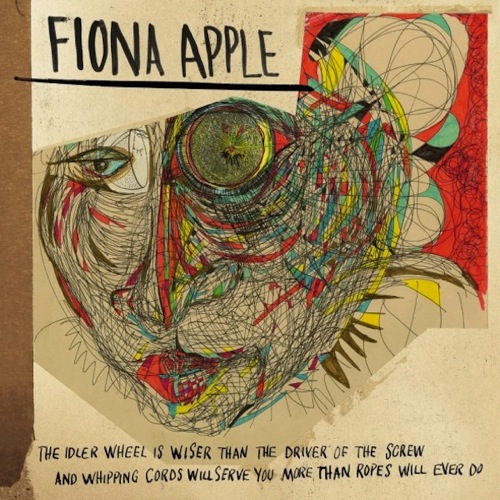
Why Fiona Apple's "The Idler Wheel..." was the Best Thing in 2012 and Other Stuff that Doesn't Suck


1. The Idler Wheel is Wiser than the Driver of the Screw and Whipping Cords Will Serve You More than Ropes Will Ever Do - Fiona Apple

In an age where every statement is clouded with layers upon layers of irony and meta-text, where the very notion of social media masks every action with pretense, forcing even the most bland of us into a life of performance art, the existence of Fiona Apple comforts me. In her, we have an artist who disappeared from the public eye for almost a decade and returned with a record so earnest and revealing that it forces us to remember what real emotions feel like. My Fiona Apple fandom is well-documented, so perhaps I'm exaggerating or gushing or whatever you want to call it. Still, the jittery, stripped down music presented to us on The Idler Wheel... coincides perfectly with the persona on the stage, and I can 't help but believe (maybe I need to believe) that in Apple is not only a genuine artist but a genuine person as well.

Every Single Night, Left Alone, Werewolf


2. The Master - Paul Thomas Anderson

Pretty much everything that can be said about PTA's The Master comes out in the film's first "processing" scene. As a movie that deals with Scientology through obfuscation, The Master seems almost elusive in its aim, a cult in and of itself. Yet in that first "processing" scene, we see a disheveled, alcoholic veteran in Joaquin Phoenix's Freddie Quell find something in Lancaster Dodd's (Phillip Seymour Hoffman) "Cause" that seems to speak to the inner turmoil within hi,. Freddie is erratic, prone to outbursts, and highly susceptible to suggest--the perfect candidate for a disciple--and the procession of  Dodd's "processing" technique and the repetition of simple questions ("What's your name?") into more probing questions about Quell's "past failures" leads the two into an emotional crescendo before dissipating into the lull of post-baptism. The films builds in much the same manner and washes out into the silence and emptiness of a cult's many promises.

Theatrical Trailer

Note: The next two entries actually do suck, but I want to right about them anyway. So here we go...

Saturday, December 15, 2012

To Fish

sean enfield is an asshole
who has taught three people
how to fish. one of them died
two years ago of starvation
while the other two live
impoverished in the slums
of houston waiting for fish
to hook themselves on the end
of one of their lines so that they

Tuesday, December 4, 2012

Mark Twain and a Kitten: An Ode

When this image was first brought to my attention, it seemed me that metaphorical stars were metaphorically aligning, and my documentative instincts immediately led to a trance of reflection. It's a horrible way to live, but we make due, don't we?

Anyway, I couldn't help but feel as though Twain was reaching out to me from beyond the grave via the medium of another literature enthusiast's blog. “Some people scorn a cat and think it not essential; but the Clemens tribe are not of these.” We, Enfields, are with you, Sam--undoubtedly, we are with you.

I was in Junior High when a teacher first introduced me to Mr. Clemens, the same year a balding football coach, through a class dubbed "Health Class," introduced me to intricacies of my then-changing body. In fifth period, we read Huck Finn aloud, several timid white children tip-toeing around the word "nigger" as though it were poison ivy or a land mine or something of that sort whilst looking in my direction to make sure the ethnic half of me hadn't taken offense, and in sixth, we watched a fifteen minute illustrating both the birds and the bees in unwanted detail, which was I how I saw the first vagina I'd ever see, crowning head and all. I had already developed a self-consciousness about my weight and my plump, perpetually-dry lips and my clammy, perpetually-moist palms. I tried to hold hands with the girl who had asked for my help on the Huck Finn paper, but she was not a fan of the nervous sweat dripping from our shared grasp.

Thursday, November 15, 2012

The Always Inevitable and Untimely Demise of the Bond Girl

For the first ten years of my life, I was convinced that my father was Sean Connery, though that was not the name by which I knew him. My real father (depending on what unit you use to measure authenticity) was present, affectionate even--offered encouraging words in times of emotional distress, watched basketball games with me, cheering when I cheered and shouting angrily when I shouted angrily, was concerned about my grades, about my future, about my general well-being--but he was tangible, thereby lacking the mystique of my real real father. I had his nose, his tendency to stand with arms hidden behind the back and to sit leaning backward, crossing legs, his gut, protruding but not too much so, his passive-aggressive manners, but that, to me, meant as much as it might mean to you if I were to tell you that that man, any man, strange in just how normal they seemed, was your father too. As a child who watched his VCR copy of The Lion King into oblivion, I expected a father to be the wise sage in the clouds, James Earl Jones, someone suave who could in one breath offer wisdom and in the next disappear. I grew up watching my mother swoon over Mr. Bond as well and so the two entities blurred in my mind. There was a brief period where her affections switched to Roger Moore’s incarnation of the character that confused me, but she found her way back to the true father and all was made well.